

Techniques
Hand-building or the wheel? How to choose your first technique
Both start with the same clay and end in the same kiln. In between, they ask very different things of your hands and your patience.
By Hlinotéka studioPublished 3 min read
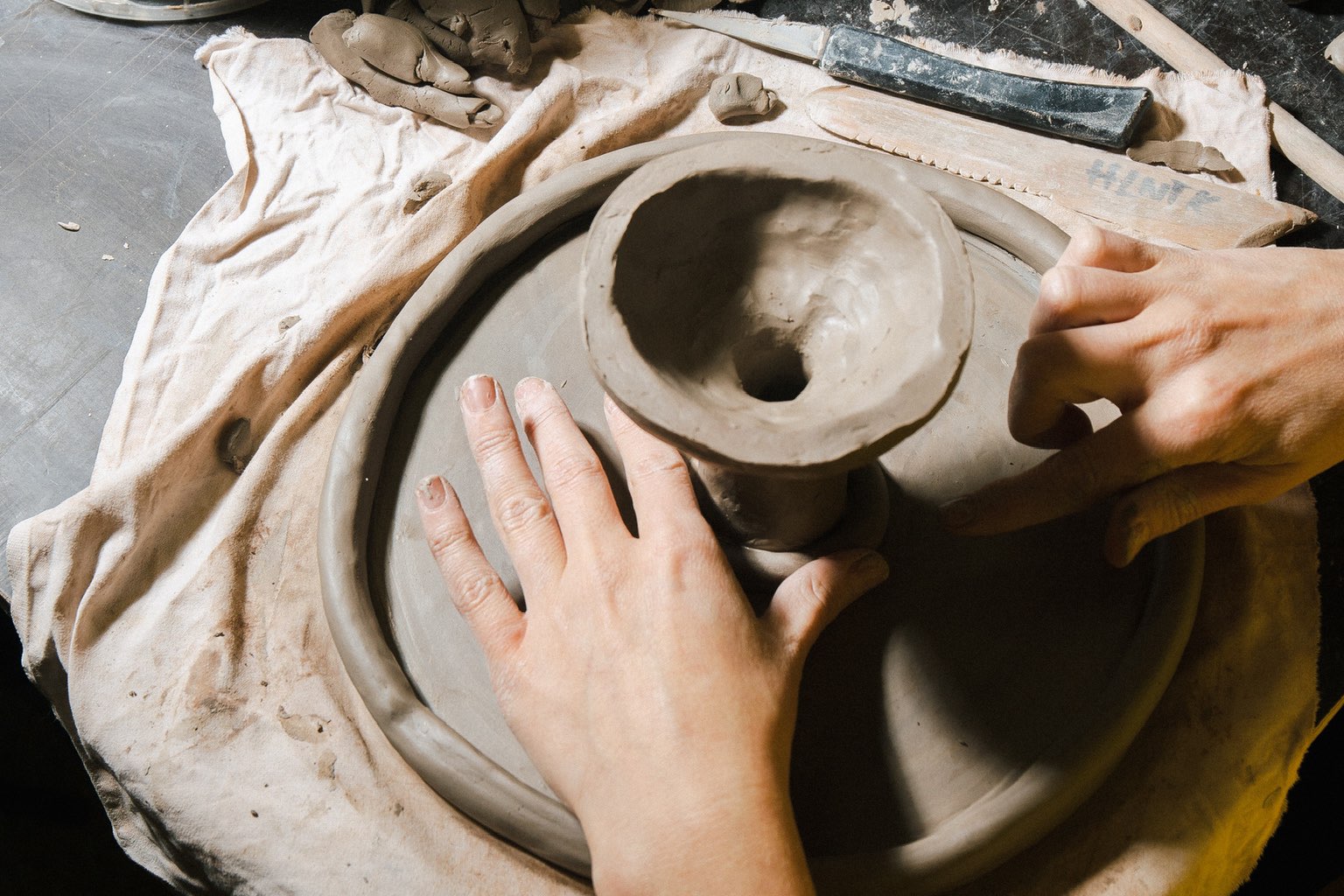
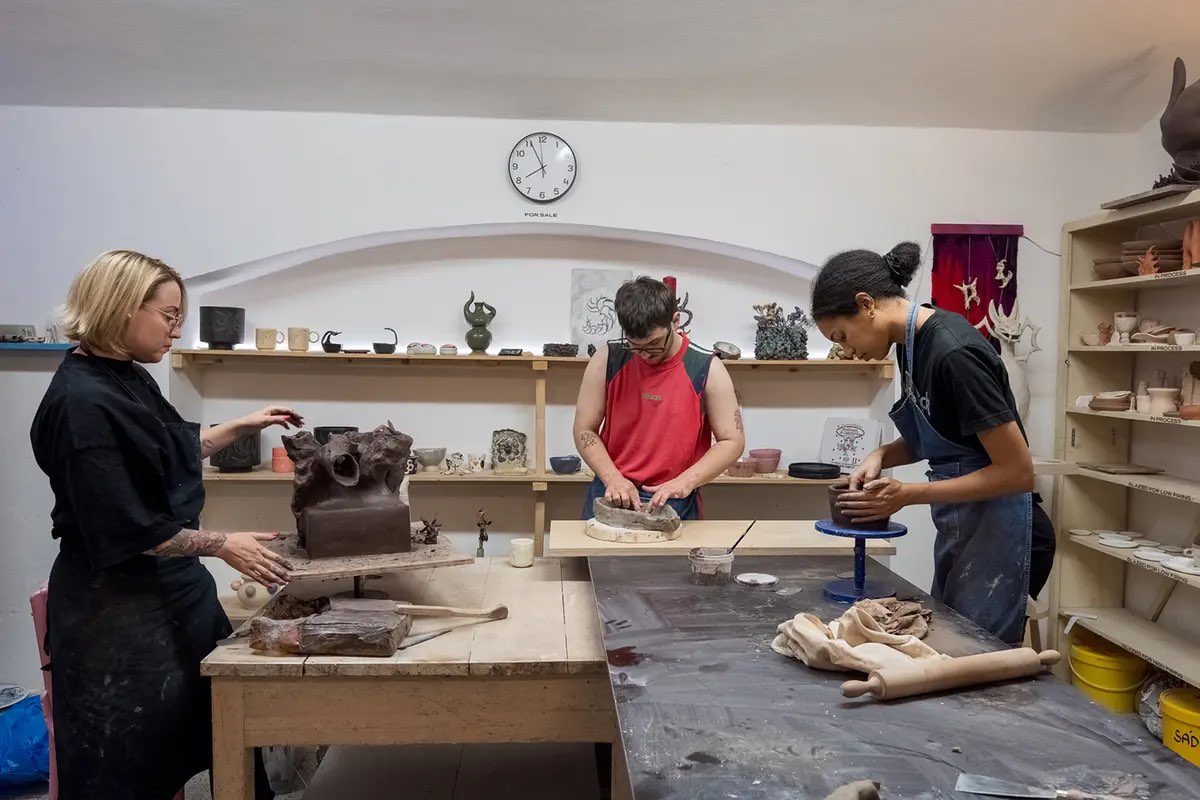
Hand-building is shaping clay with your hands and simple tools: pinching it, rolling it into coils, or cutting it into slabs and joining them. Wheel throwing is shaping clay while it spins on a potter's wheel, pulling a lump into a hollow, symmetrical form. Most potters end up doing both, but for a first course you have to pick one.
How fast you learn
Hand-building rewards you quickly. Within an hour most people have a pinch pot or a small slab dish, and the techniques build on each other in an obvious way.
The wheel has a steeper start. Before you can make anything you have to centre the clay, and centring is a feel for pressure and water that only comes with repetition. The first evening often ends with more clay in the bucket than on the wheel. Once it clicks, though, you can make a bowl in minutes.
What you can make
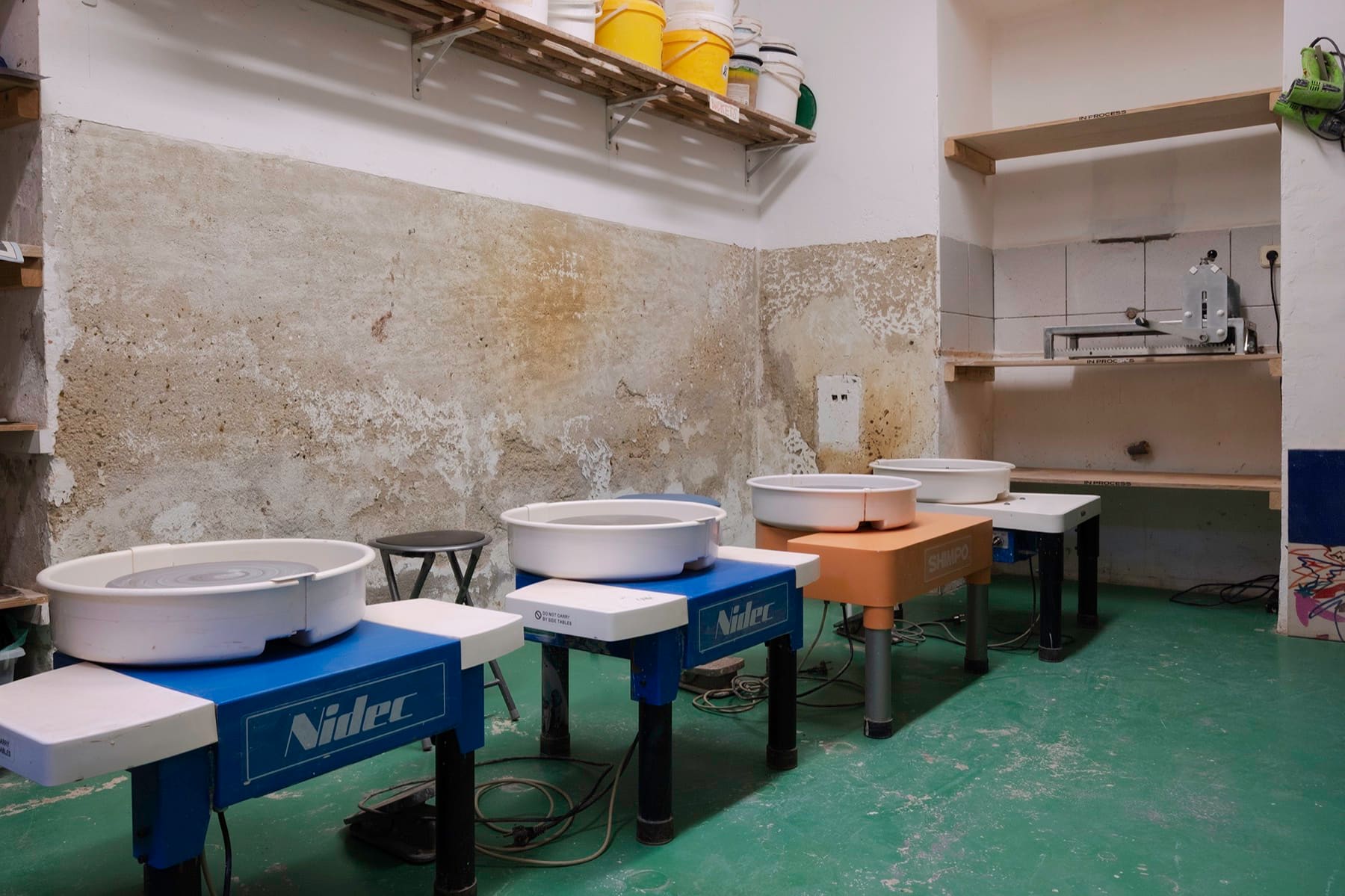
The wheel makes round things: bowls, cups, vases, plates, anything with a circular cross-section. Repeating the same form is part of its appeal, which is why it is how most tableware sets are made.
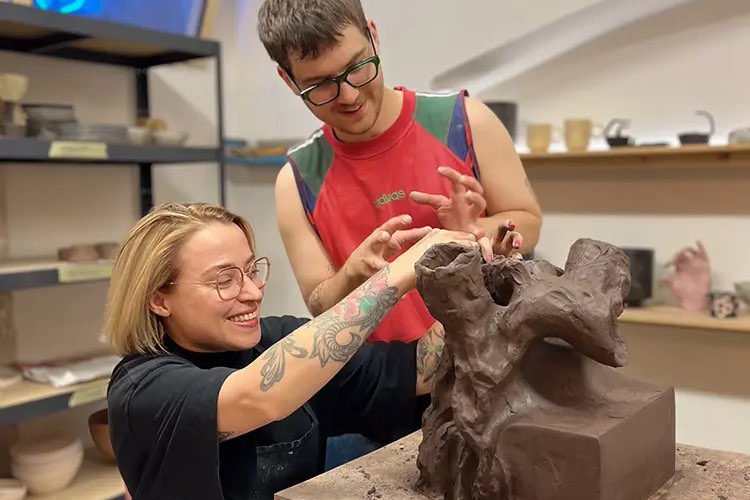
Hand-building has no such limit. Square dishes, sculptural vessels, tiles, figures, anything asymmetric or angular comes from the hand. It is also the easier route to large pieces, which would need real skill to throw.
How it feels
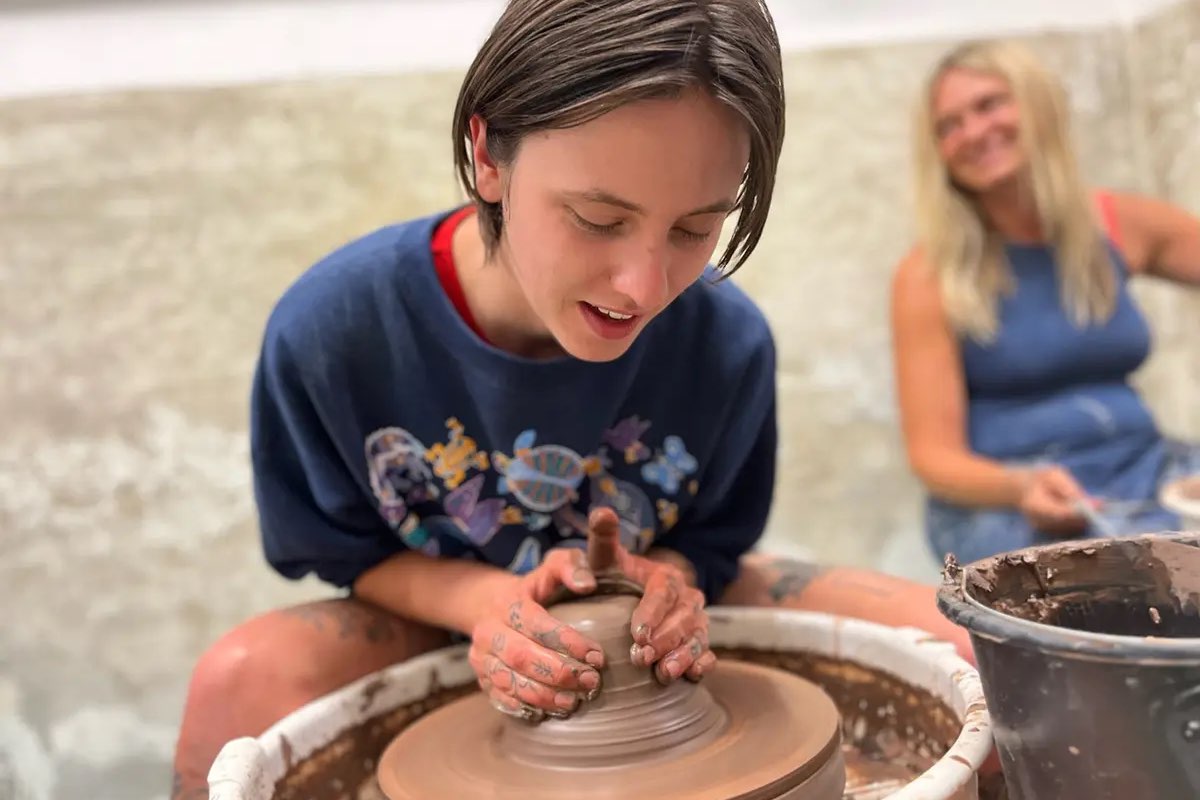
The wheel is physical and absorbing: you lean into the clay, keep your arms braced, and the spinning demands your full attention. People often describe it as meditative once centring stops being a fight. Hand-building is slower and more deliberate, closer to drawing or construction. You can stop, look, and change your mind.
Which suits a beginner?
- Start by hand if you want to make something specific, prefer a gentle start, or care more about shape than symmetry.
- Start on the wheel if you are drawn to cups and bowls, enjoy practising a single skill, and do not mind a frustrating first evening.
Neither is harder in the long run. They are different crafts that share a material.
Where the process differs
Thrown pieces go through an extra stage: trimming. A day or so after throwing, when the pot is leather-hard, it goes back on the wheel upside down and the base is shaved to form a foot. Hand-built pieces skip this, but joins need care: coils and slabs have to be scored and joined with slip so they do not separate as the piece dries. After that, both follow the same path of drying, bisque firing, glazing and a final firing, described in Your first pottery class.
How the two courses compare at Hlinotéka
Our wheel-throwing course is four evenings: two of throwing, one of trimming, and one of glazing about two weeks later, for 3,600 CZK. The hand-building course is one Saturday of modelling, joining and slab building, with a two-hour glazing lesson two weeks later, for 2,000 CZK. Both include clay, glazes and both firings. Once you know the basics, open studio lets you use the wheels and the tables on your own.
Pick one and start
See both coursesHlinotéka studio
Hlinotéka is a ceramic studio in Letná, Prague 7, run by Johana Hnízdilová and Borek Smažinka. We teach wheel throwing and hand-building, run open studio evenings, and fire work made elsewhere.
Keep reading
Guides
Your first pottery class: what actually happens
No experience needed. What happens in a first pottery class, what to wear, and why your pot is ready weeks later: drying, bisque firing, glazing and the final firing.
3 min read
Guides
Pottery in Prague: workshops, courses and open studios explained
What a ceramic studio in Prague actually offers: one-off workshops, courses, open studio, membership and firing, what each one is for, and where to start.
4 min read
Techniques
Where to fire your ceramics in Prague, and what the kiln needs to know
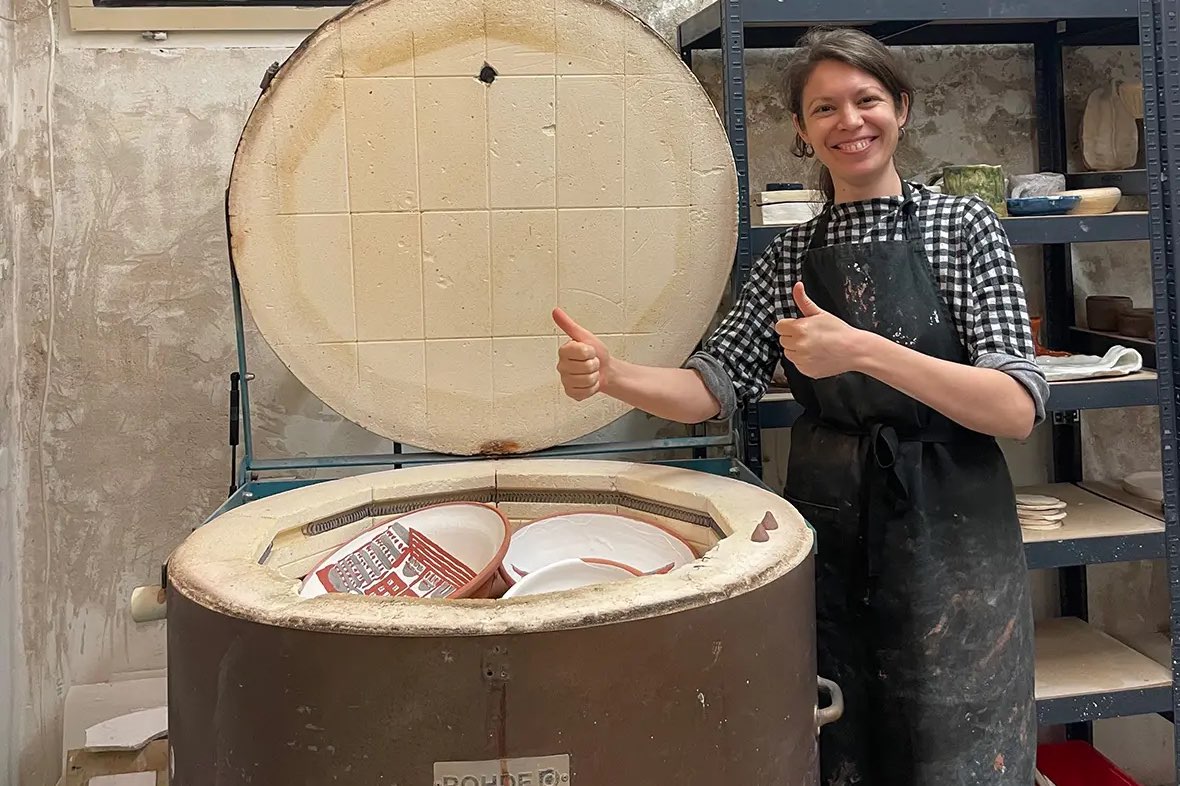
Made pottery at home or in a studio without a kiln? How bisque and glaze firing work, why clay matters, what a studio will ask you, and how external firing works.
3 min read