

Techniques
Where to fire your ceramics in Prague, and what the kiln needs to know
Clay is not ceramics until it has been fired. If you made something without a kiln nearby, this is what happens next, and what the people firing it will want to know.
By Hlinotéka studioPublished 3 min read
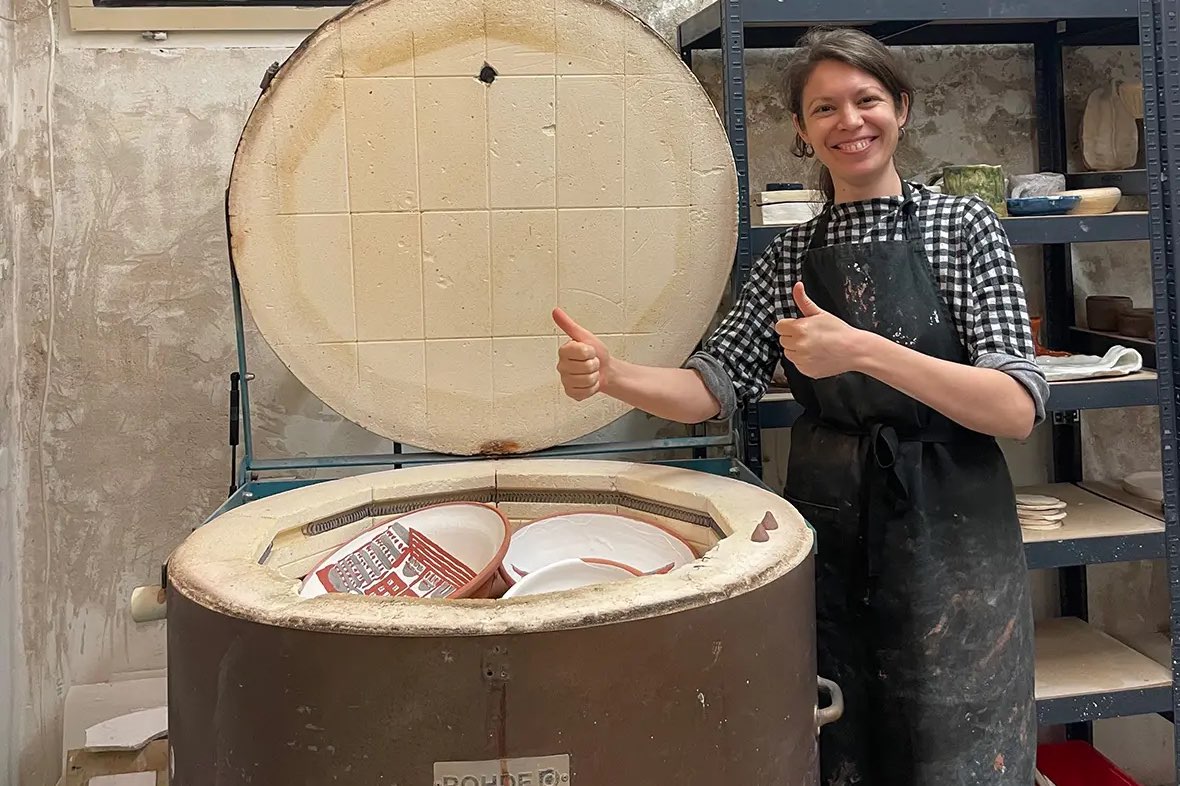
Two firings: bisque and glaze
Most pieces are fired twice. The bisque firing comes first: the completely dry piece is heated to a moderate temperature and turns hard and porous. It can no longer be dissolved in water, but it still absorbs liquid, which is what lets glaze cling to it.
The glaze firing comes second, usually hotter. The glaze melts into glass and fuses to the surface, and the clay itself becomes denser. Pieces left unglazed can be taken to the higher temperature on their own.
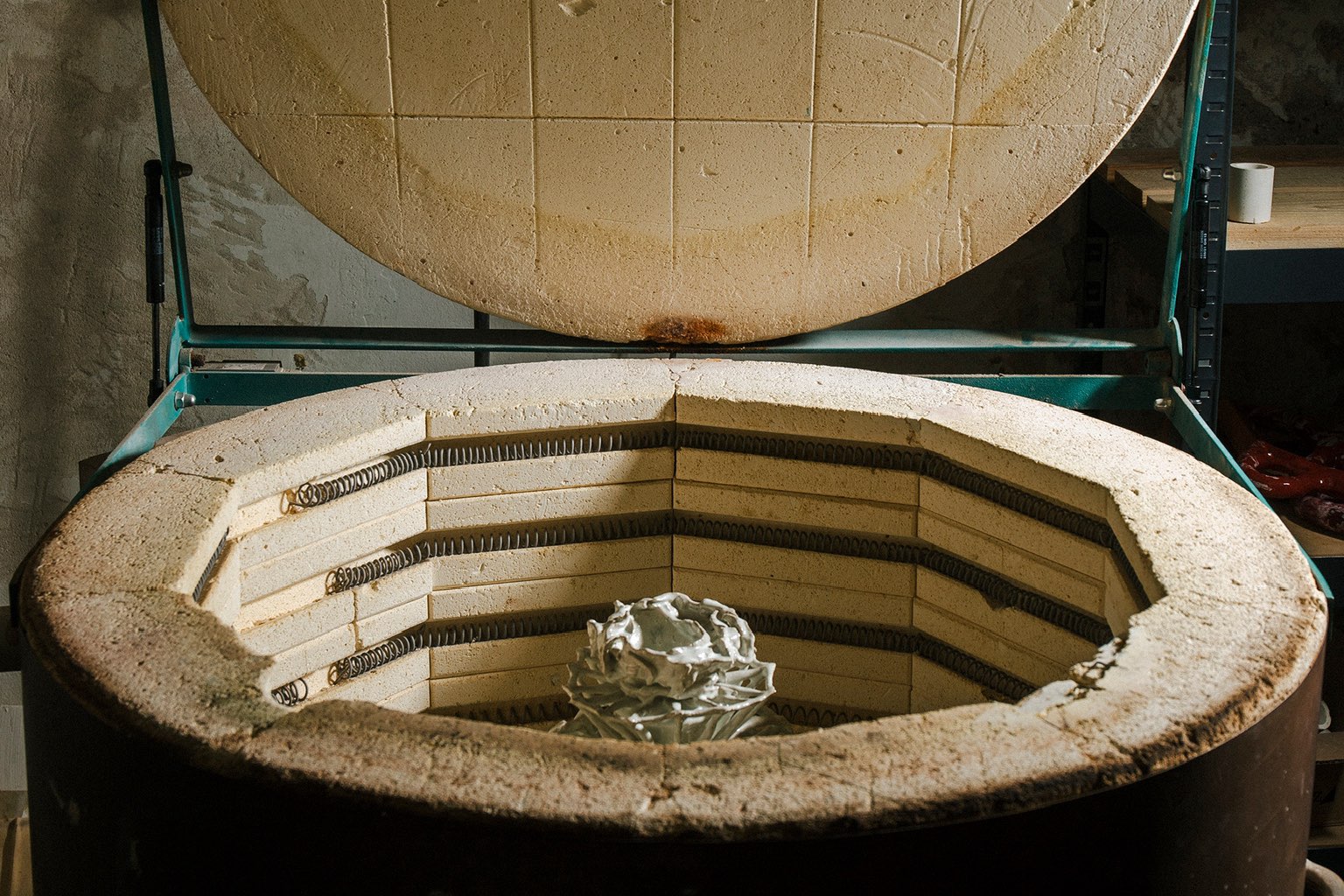
Why the clay decides the temperature
Every clay body has a range in which it matures: hot enough to become strong, not so hot that it slumps, bloats or melts. Earthenware matures lower, stoneware and porcelain considerably higher. A glaze is made for a particular temperature too. Fire either too low and the piece stays weak or the glaze stays rough; fire too high and it can deform, and a runny glaze can fuse the piece to the kiln shelf.
Why studios turn down unknown clay
A kiln is shared. If one piece melts or explodes, it can damage other people's work, the shelves and the kiln itself. That is why a studio may refuse pieces when:
- nobody knows what the clay is or what temperature it takes;
- the pieces are not fully dry, and trapped water turns to steam;
- they are very thick or have closed air pockets;
- glaze covers the base, where it would fuse to the shelf;
- the glaze is unknown and might run.
What to tell a studio
- What you made and roughly how much: number and size of pieces.
- Which firing you need: bisque, glaze, or both.
- The clay, and the glaze if there is one, with their firing temperatures.
- Whether the pieces are bone dry.
- When you need them back.
How external firing usually works
You agree the firing in advance, bring the pieces, and collect them after the kiln has fired and cooled. Studios either charge by the whole kiln or by the space your work takes. Because firing an almost empty kiln wastes energy, many fill the remaining space with their own work or with pieces from classes.
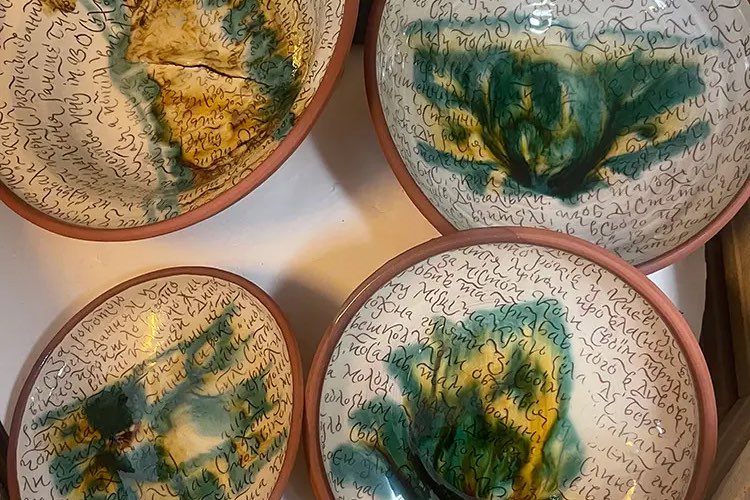
Firing at Hlinotéka
Hlinotéka is a ceramic studio in Letná, Prague 7, that fires work made elsewhere, by arrangement. We have two Rohde top-loading electric kilns:
- Large kiln, 55 × 65 cm inside: 2,500 CZK per firing.
- Small kiln, 40 × 45 cm inside: 1,800 CZK per firing.
We bisque-fire at 900 °C and glaze-fire at 1,100 °C; a different temperature can be arranged individually. If your work does not fill a kiln, the price follows the volume you bring, and we top the kiln up with our own pieces or those of course participants. If a firing is urgent, tell us and we will try to fit you in.
To book, tell us what you are firing, roughly how much, and at what temperature, and we will reply with the next free kiln. Everything is on the firings page.
Need a kiln?
Book a firingHlinotéka studio
Hlinotéka is a ceramic studio in Letná, Prague 7, run by Johana Hnízdilová and Borek Smažinka. We teach wheel throwing and hand-building, run open studio evenings, and fire work made elsewhere.
Keep reading
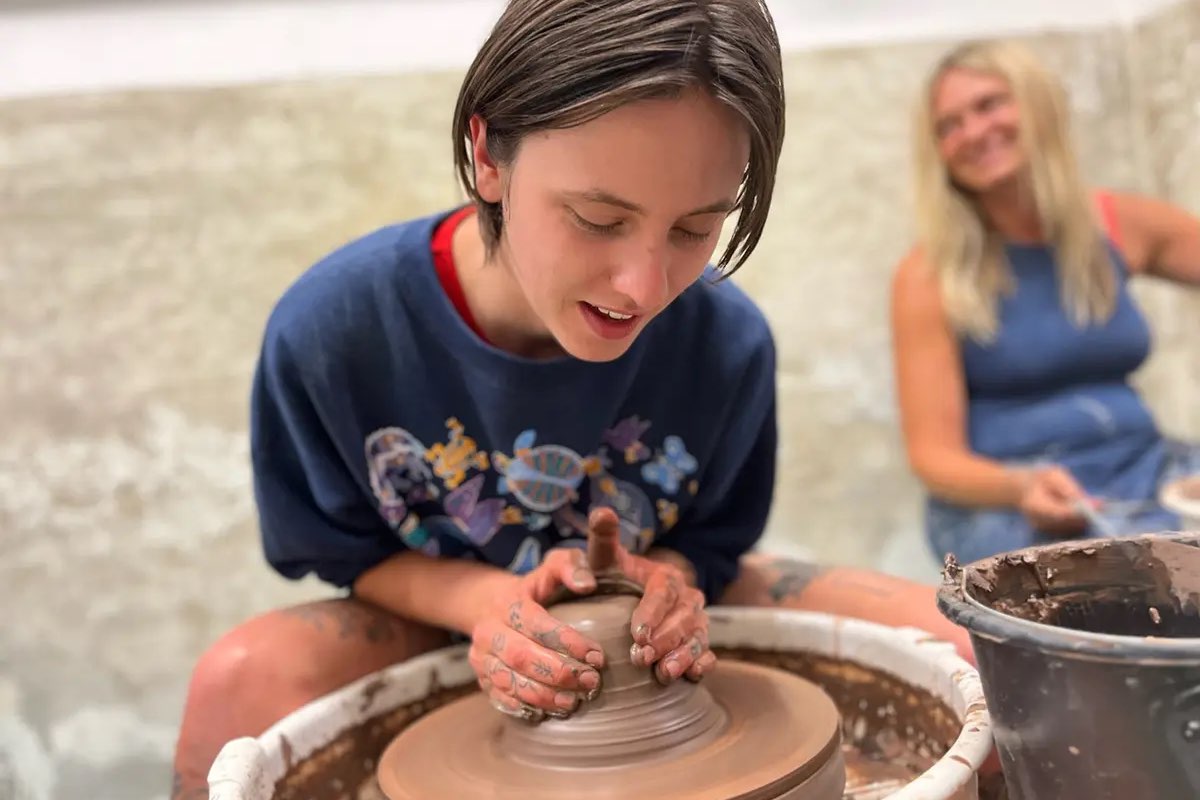
Guides
Your first pottery class: what actually happens
No experience needed. What happens in a first pottery class, what to wear, and why your pot is ready weeks later: drying, bisque firing, glazing and the final firing.
3 min read
Guides
Pottery in Prague: workshops, courses and open studios explained
What a ceramic studio in Prague actually offers: one-off workshops, courses, open studio, membership and firing, what each one is for, and where to start.
4 min read
Techniques
Hand-building or the wheel? How to choose your first technique
The two ways of shaping clay compared: how fast you learn, what you can make, how each one feels, and which suits a beginner.
3 min read